mm, mm² and AWG describe different things
Diameter in mm and metallic area in mm² are different quantities. If your drawing uses AWG, include the gauge system and whether it refers to solid wire or the equivalent area of a stranded conductor.
Copper wire in spool and coil formats, with solid-wire and stranded-conductor examples. Match the conductor dimensions, material condition and delivery package to your drawing, equipment and application.
Enlarge any of the seven supplied photos to compare spool formats, coiled wire and visible stranded construction. Exact grade, diameter and surface treatment are confirmed by the order specification.
For solid round wire, quote the diameter in mm. For a stranded conductor, quote the metallic area in mm² plus the number and diameter of individual wires. Overall bundle diameter is a separate dimension.
The dimensions below are practical sourcing examples, not a confirmed stock list or manufacturing limit. Supply combinations and tolerances are confirmed for the selected grade, temper and order.
| Form / dimension | Common inquiry examples | Selection notes |
|---|---|---|
| Solid wire · fine diameters | 0.20, 0.30, 0.50 mm | Examples for fine drawing, small formed parts and further processing. Agree diameter tolerance, continuity, surface and pay-off requirements. |
| Solid wire · intermediate diameters | 0.80, 1.00, 1.50, 2.00 mm | Examples for conductive components and forming feedstock. Match temper, elongation, bend requirements and surface condition to the process. |
| Solid wire · larger diameters | 2.50, 3.00, 4.00 mm | Discuss rigidity, coil handling and any straightening or cutting needs. Availability depends on the required material and package. |
| Stranded conductor · metallic area | 6, 10, 16, 25, 35, 50 mm² | Sourcing examples, not an ampacity table. Specify strand count × individual-wire diameter, lay, flexibility and the applicable conductor standard. |
| Individual wire and finished conductor | n × d; overall diameter and lay by specification | State whether dimensions refer to an individual wire, bare stranded bundle or finished insulated product. Do not treat these diameters as interchangeable. |
| Spool, coil or drum | Flange / barrel / bore dimensions, net weight and pay-off direction | Supply the spool drawing or equipment limits, coil ID / OD, maximum package weight and continuous-length requirement. |
Diameter in mm and metallic area in mm² are different quantities. If your drawing uses AWG, include the gauge system and whether it refers to solid wire or the equivalent area of a stranded conductor.
Copper colour alone does not establish whether wire is bare or enamelled. State bare, plated or insulated requirements explicitly. For enamelled-wire requests, provide the insulation specification, build and thermal class for review.
Common requests for conductive copper feedstock. Confirm the governing material specification, chemistry and electrical properties; the photo does not identify the copper grade.
If your drawing requires C10200 or another oxygen-free grade, include the exact designation and standard. Grade substitutions and supply combinations are reviewed before quotation.
Match temper to drawing, bending, forming or connection needs. ASTM B3 covers soft or annealed copper wire; ASTM B8 addresses concentric-lay stranded copper conductors. State the applicable standard and edition rather than assuming every construction uses the same specification.
Wire may be feedstock for conductive parts, further drawing or cable production. Define individual-wire diameter, resistance, elongation, surface cleanliness and continuous length around the downstream process.
Stranded-conductor inquiries may require a defined area, construction and termination arrangement. Provide the installation specification and mating terminal details; the complete installation determines suitability.
A stranded construction can accommodate different handling and forming needs from solid wire. Define strand count, individual-wire size, flexibility, termination and any movement requirement; stranded appearance alone does not establish a flex-life rating.
Specify bend radii, temper, diameter tolerance and spool pay-off for forming or downstream winding processes. Motor or transformer magnet-wire requests also need a defined insulation system; bare copper is not interchangeable with enamelled winding wire.
Provide the finished wire size, tolerance and mechanical requirements. Drawing and annealing requirements are reviewed against the requested grade and delivery form.
List the required metallic area, number and diameter of wires, lay direction and construction standard. Confirm whether a compacted or other special construction is required rather than inferring it from a photograph.
State the required bare surface or any plating or insulation specification. Special finishes are reviewed for quotation; the supplied photos do not certify coating type, thickness or insulation class.
Specify spool or drum dimensions, traverse winding, pay-off direction, continuous length and permitted joints. Identify each end and protect it during packing.
Start with solid or stranded construction, diameter or area, and intended use. Add the required material condition, surface specification, total quantity and spool or coil dimensions for a useful quotation.
Request a copper wire quotationNo. Colour and a photograph do not establish an insulation or coating system. State the required surface explicitly. Enamelled or otherwise insulated wire requires its own agreed specification and is reviewed separately.
Provide metallic cross-sectional area, strand count and individual-wire diameter, plus construction standard and overall-diameter limits where relevant. Include lay, flexibility, termination and package requirements.
Send the spool drawing or equipment limits, net weight, required length, pay-off direction and permitted joints. The package and production combination are confirmed during quotation.
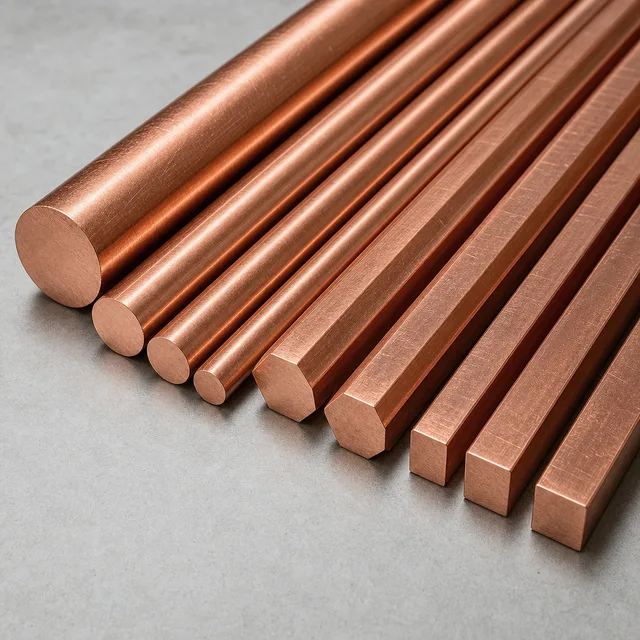
Round, square and hexagonal copper bars for machining, conductive parts and thermal components. Explore dimensions, grades and cut-length requirements.
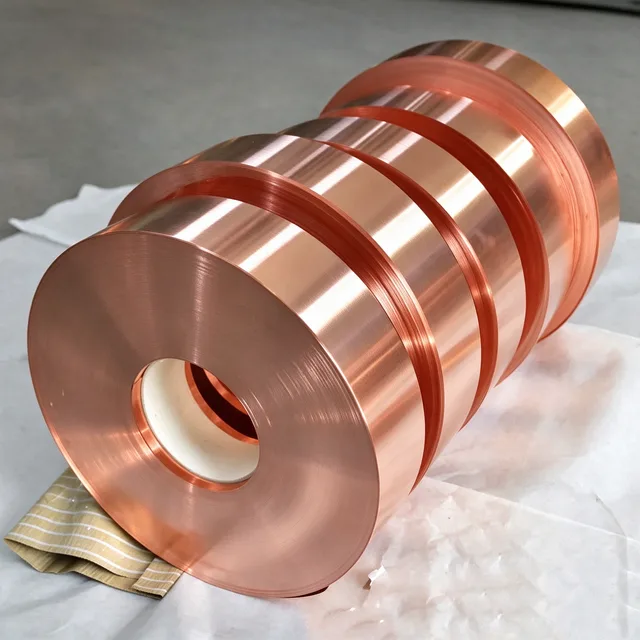
Copper strip and flat-rolled coils for stamping, conductive parts and fabrication. Explore thickness, slit width, material condition and coil dimensions.
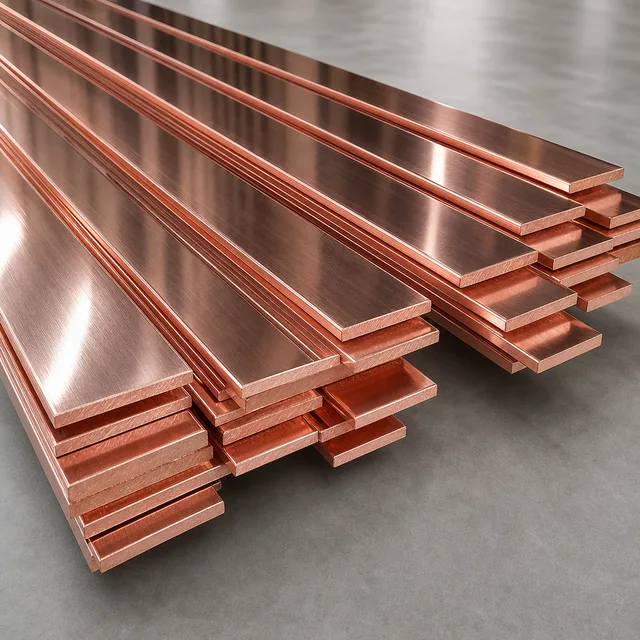
Bare and tin-plated copper busbars for electrical connections. Explore flat-bar sizes, edge profiles, finish requirements and drawing-based processing.